pun’hwe’num’ – is the term we use in Stz’uminus for the month of May. This is named for speenhw “blue camas” [Camassia leichtlinii (Baker) S. Wats. and/or C. quamash (Pursh) Green. Some Elders say tum’peenhw – tum’ – time of camas, or tum’pe’un’hw – time of getting camus. This was an important starch food for our people. It was gathered from island bluffs and high fields and baked, steamed or roasted. It has a sweet taste similar to marshmallows. There were strict rules about who could harvest where and when. And our ladies tended the camas plots to make sure that they thrived. The dried camas would be put away in the winter box and used in soups during the winter time, along with wild onions, and wapato.
Roxanne Seymour from shtsum’inus on camas
Featured Plant
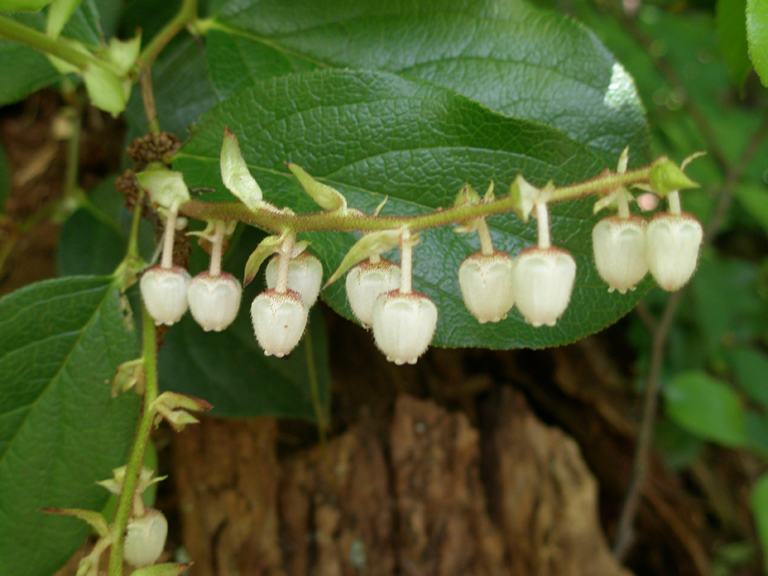
t’eqe’ | Salal
Salal is a creeping to erect shrub that varies in height from 0.2-5 m (ca. 8 in to ca. 16.5 ft) tall. It has thick, leathery leaves that stay green all year long. The flowers are white or pinkish, urn-shaped, and produce reddish-blue to dark purple “berries.” Actually, these “berries” consist mostly of fleshy sepals, the small leaflike structures found at the bases of the flowers. which surround the true fruit. Salal occurs in coniferous forests and on rocky bluffs to the seashore, from low to middle elevations throughout coastal British Columbia.
The dark purple fruits of salal are edible.